Tire Changer OEM Manufacturing Process for Distributors
Tire Changer OEM Manufacturing Process for Distributors
Choosing a tire changer OEM manufacturer requires more than reviewing a catalog or comparing motor power. Distributors, importers and automotive equipment brands need a repeatable manufacturing process that converts market requirements into a stable machine specification, consistent production quality and documentation that technicians can actually use. A clear OEM process also reduces specification changes, packaging problems and after-sales misunderstandings.
Autokato Engineering is an independent automotive service equipment manufacturer providing OEM and ODM production for global equipment brands. Buyers can review the Autokato automotive equipment factory before discussing a private label tire changer program.
1. Define the Target Tire Service Market
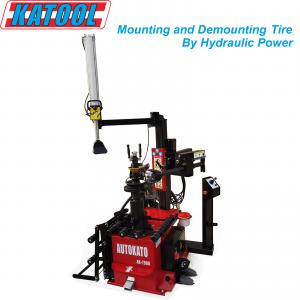
The OEM process should start with the wheels and tires found in the target market. A distributor should identify common rim diameters, wheel widths, low-profile tire volume, run-flat service demand, vehicle types, available voltage and workshop air pressure. These details determine whether the project needs a standard swing-arm machine, an assist-arm configuration, a center-post design or heavy-duty equipment.
Daily service volume matters as much as maximum wheel size. A machine selected only by its largest advertised capacity may not provide the best workflow for the wheels handled most often. A practical requirement sheet should list normal applications first, occasional applications second and any special adapters that must be included.
2. Confirm the Machine Specification Before Production
A professional tire changer manufacturing process uses an approved specification as the production reference. Buyers should confirm the clamping range, maximum wheel diameter, bead-breaker force, turntable design, motor configuration, operating pressure, control layout and included accessories. Electrical frequency, plug type, warning labels and manual language should also be agreed before mass production.
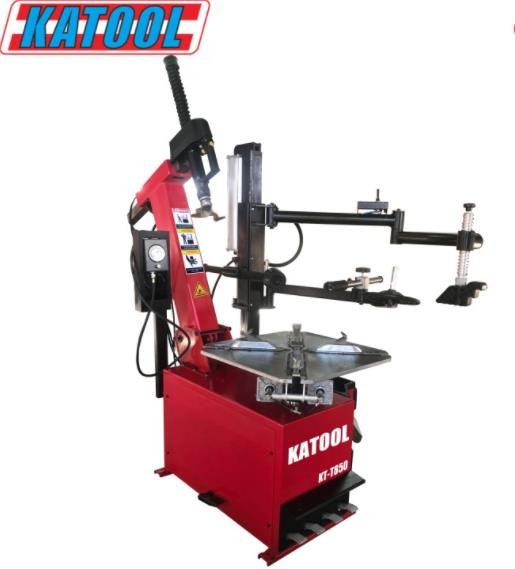
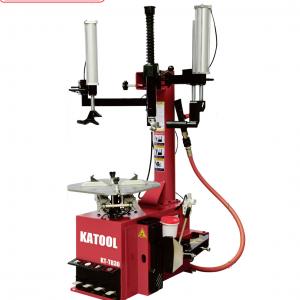
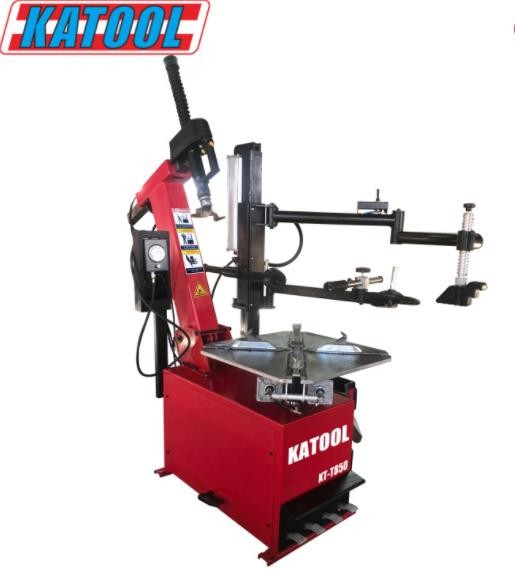
Models such as the Autokato KT-T850 tire changer machine and the Autokato KT-T810 wheel clamp tire changer provide useful reference points when distributors compare common passenger-vehicle configurations. Final specifications should always be confirmed for the destination market.
3. Review OEM Branding and Private Label Details
Private label tire changer production can involve cabinet colors, model labels, control-panel markings, safety decals, rating plates, cartons and manuals. Branding files should be supplied in an agreed format, and the buyer should approve their position and size before production. The brand owner remains responsible for its market positioning, while Autokato provides manufacturing support according to the approved OEM specification.
Distributors planning a broader private label program can also use the private label garage equipment OEM checklist for distributors to organize commercial and technical requirements.
4. Check Assembly and Functional Testing
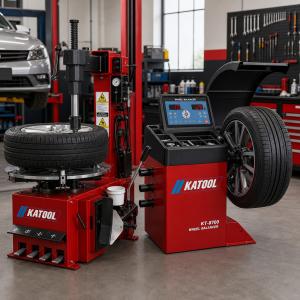
Quality control should cover more than appearance. During assembly, technicians should verify fasteners, pneumatic connections, electrical wiring, moving components, pedal operation and protective parts. Functional testing should confirm turntable rotation, clamping movement, bead-breaker operation, air leakage and the movement of any assist-arm components.
A useful supplier audit asks how test results are recorded, how nonconforming units are separated and how corrections are verified. Buyers should also ask whether final inspection criteria are linked to the approved model specification instead of relying on a general visual check.
5. Verify Documentation and Compliance Information
Manuals, wiring information, maintenance instructions and safety labels should match the delivered model. Requirements vary by product and destination, so buyers should review the available automotive equipment certificates and test reports and confirm which documents apply to the selected configuration.
The Autokato tire changer manuals and technical document library helps distributors and workshops locate operating information for supported equipment. Model numbers on manuals, rating plates and cartons should remain consistent.
6. Approve Packaging and Shipment Protection
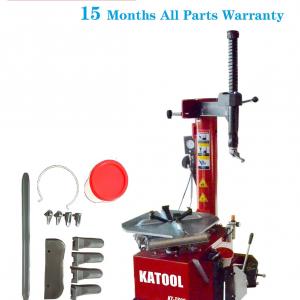
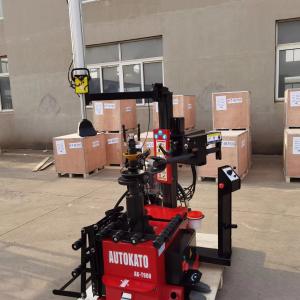
Tire changers contain heavy structures and projecting components, so packaging must control movement during transport. Buyers should confirm the base fastening method, protective material, accessory placement, carton marks, gross weight and package dimensions. Spare parts or loose accessories should be identified so they are not mistaken for missing components after delivery.
Container planning should consider package dimensions and unloading conditions at the destination. Clear packing lists and model identification make receiving inspection easier for distributors handling multiple configurations.
7. Establish a Pre-Shipment Acceptance Checklist
Before shipment, the buyer and factory should review the approved model, quantity, voltage, color, branding, accessories, documentation and packaging. For a new OEM project, photos, video or sample-unit confirmation can help verify important details. Any agreed change should be recorded rather than communicated only through informal messages.
Conclusion
A dependable tire changer OEM manufacturing process connects market requirements, approved specifications, controlled assembly, functional testing and shipment documentation. Distributors should evaluate the complete process instead of selecting a supplier by price alone. To discuss a private label tire changer project, contact Autokato Engineering for an OEM equipment inquiry with your target wheel range, voltage, expected order quantity and branding requirements.