Two Post Lift Guide for Pickup Trucks and Tall Vehicles
How to Choose a Two Post Lift for Pickup Trucks and Tall Vehicles
Choosing a two post lift for pickup trucks and tall vehicles requires more planning than choosing a lift for standard passenger cars. Vehicle weight, wheelbase, roof height, lifting-point position and workshop ceiling clearance all affect whether the lift will work safely and efficiently. Repair shops and garage equipment buyers should compare the complete service environment instead of looking only at rated capacity.
Check vehicle weight with a practical margin
The lift capacity must exceed the heaviest vehicle the shop expects to service. A workshop handling half-ton and heavy-duty pickups should review actual curb weight, optional equipment and loaded service conditions. Selecting a lift at the exact vehicle weight leaves little operating margin. A higher-capacity lift can provide more flexibility for larger trucks, commercial vans and future customer needs.
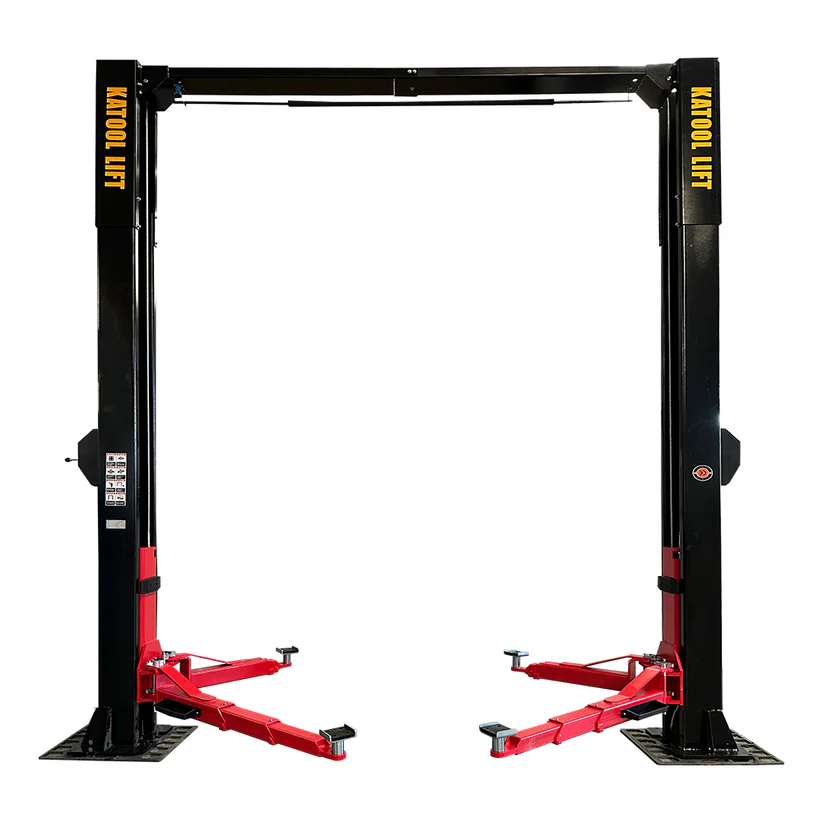
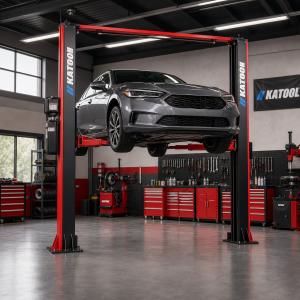
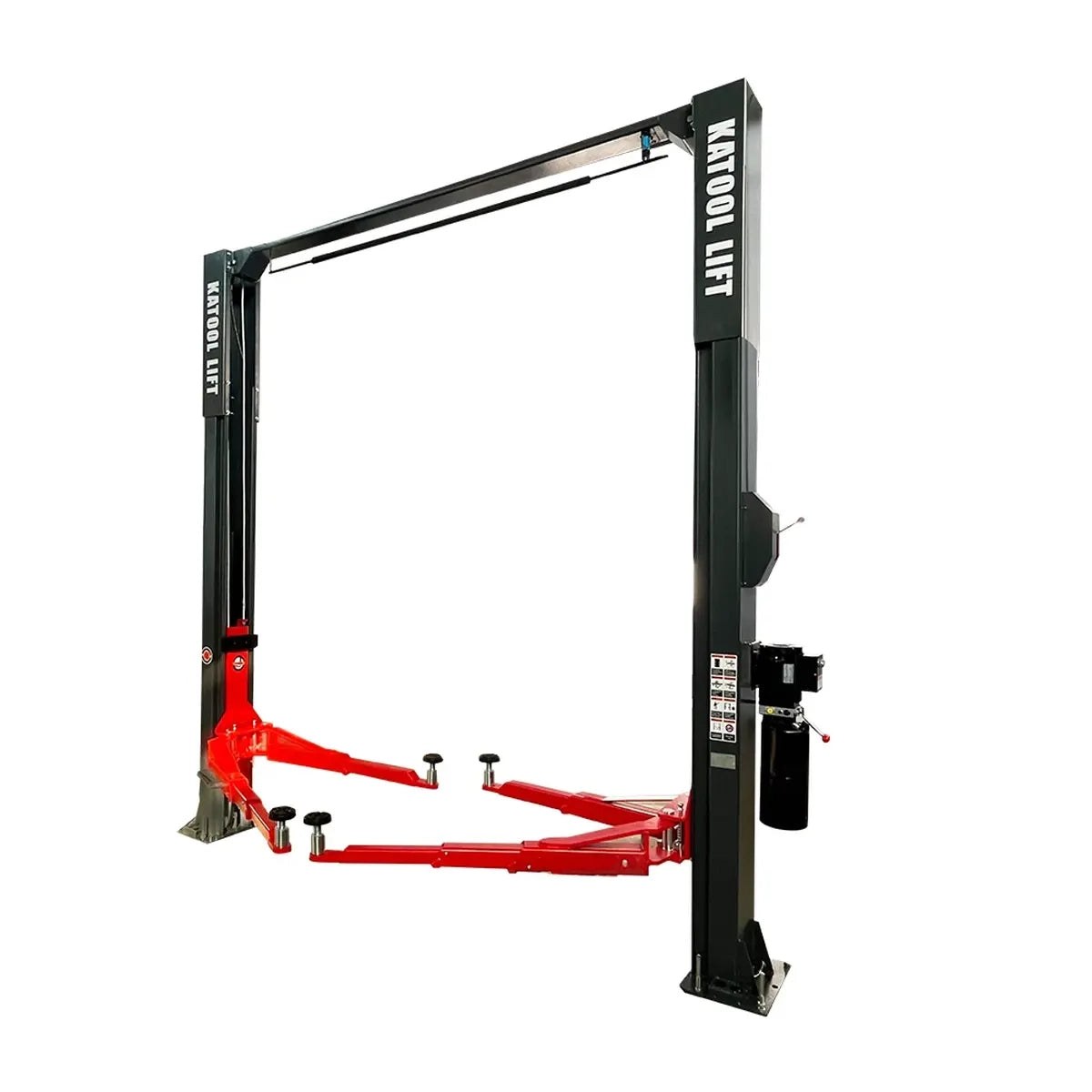
The KATOOL KT-M140XD 14,000 lb two post lift is relevant for buyers searching for a heavy-duty two post lift for pickup trucks, SUVs and larger service vehicles.
Measure roof height and ceiling clearance
Tall vehicles need enough clearance above the roof when raised. Overhead two post lifts also include a top crossbar, so the installer must compare lift height, ceiling height and the maximum vehicle profile. Garage doors, lighting, ventilation ducts and roof beams can reduce usable clearance even when the main ceiling measurement looks sufficient.
Before ordering, measure from the finished floor to the lowest obstruction. Then compare that figure with the lift installation height and the raised vehicle height needed for the technician's normal working position.
Consider wheelbase and lifting-point reach
Pickup trucks and long-wheelbase vans place lifting points farther apart than many passenger cars. The lift arms must reach the correct manufacturer-approved points without forcing the vehicle into an awkward position. Buyers should review arm configuration, pad adjustment and available adapters when comparing a two post vehicle lift for long-wheelbase trucks.
For shops that service a mixed range of vehicles, the goal is not simply longer arms. The arm design should support practical positioning for both smaller cars and larger pickups while maintaining stable contact at all four lifting points.
Compare overhead and floor-plate layouts
An overhead two post lift keeps the floor area between the columns clear, which can make tool movement and under-vehicle work easier. A floor-plate design may be useful where ceiling height is limited, but the base plate crosses the working area. Each layout has tradeoffs, so the best choice depends on ceiling height, vehicle profile and the jobs performed in the bay.
Buyers comparing lift types can read the two post lift or four post lift guide for a broader comparison of service access, drive-on operation and workshop use.
Confirm concrete and installation requirements
A heavy-duty two post lift depends on the supporting floor and anchors. Concrete thickness, strength, condition and slab integrity must meet the lift manufacturer's installation requirements. Cracked, weak or unknown concrete should be evaluated before installation. Correct column spacing, level setup and anchor torque are essential parts of a reliable pickup-truck lift installation.
Plan for doors, mirrors and technician access
Wide pickups require enough room between the columns and surrounding walls. Door opening, extended mirrors and side steps can affect how easily the vehicle enters and how comfortably the technician exits. A lift that technically fits the bay may still create a slow workflow if the vehicle must be repositioned several times.
Choose by the vehicles the shop wants to attract
A repair shop planning to grow its truck and van business should select equipment for future workload as well as current customers. The broader car lift buying guide for auto repair shops explains how service type, vehicle mix and bay planning influence lift selection.
The right two post lift for pickup trucks and tall vehicles combines suitable capacity, usable arm reach, enough overhead clearance and correct installation conditions. Autokato Engineering supplies KATOOL automotive lifts for professional workshops, dealers and distributors building service bays for cars, pickups, SUVs and commercial vehicles.