Tire Changer Bead Breaker Troubleshooting for Reliable Wheel Service
Tire Changer Bead Breaker Troubleshooting for Reliable Wheel Service
A bead breaker that loses force, moves slowly or does not reach the tire sidewall can disrupt an otherwise efficient service bay. The problem is not always a failed cylinder. Air supply, pedal response, lubrication, linkage adjustment and the way the wheel is positioned can all affect the result. This guide gives technicians and workshop managers a practical method for diagnosing common bead breaker issues on a professional tire changer before replacing parts or changing machine settings.
Start with Safe, Repeatable Symptoms
Before opening a cabinet or disconnecting an air line, identify what the machine is actually doing. Does the bead breaker fail on every wheel, only on stiff sidewalls, or only after several cycles? Does it move but lack force, stay fully still, return slowly, or continue moving after the pedal is released? Record the wheel size, tire type and the machine condition when the issue appears. A repeatable symptom helps separate a machine problem from a difficult tire or an incorrect operating position.
Follow the lockout, air-release and service instructions for the specific model before inspecting any pneumatic or moving component. The Autokato manuals library is a useful starting point for operation and maintenance references, but technicians should confirm the exact model and installed accessories before carrying out service work.
Check the Air Supply First
Pneumatic tire changer functions depend on stable, clean compressed air. A bead breaker may appear weak when the compressor cannot maintain pressure during a working cycle, when the regulator is set too low, or when a restricted hose or fitting limits flow. Check the pressure at the machine while the bead breaker is activated, not only when the machine is idle. A large pressure drop under load points to an air-delivery issue upstream of the cylinder.
Drain moisture from the air system according to the workshop maintenance routine and check the filter, regulator and lubricator arrangement where fitted. Water, contaminated air and damaged hoses can cause inconsistent valve operation over time. Do not increase pressure beyond the range stated for the machine in an attempt to compensate for another fault. Correcting the supply condition is safer and more reliable than forcing the mechanism to work outside its intended setup.
Inspect the Pedal, Valve and Air Lines
If the bead breaker does not react when the pedal is pressed, listen for air movement at the valve and inspect the pedal linkage for obstruction or excessive play. A pedal that does not fully actuate the valve can create a partial signal that feels like low power. Look for cracked tubes, loose push-fit fittings and obvious air leaks around connections. A leak may be audible, but a small leak can also be identified with an approved leak-check method while following safe workshop practice.
Compare the pedal feel and response with the other machine functions. If table rotation, clamping or assist functions also respond slowly, the cause is more likely shared air supply or valve control. If only the bead breaker is affected, focus the inspection on its dedicated valve, line, cylinder and mechanical linkage. This simple comparison avoids replacing a component before the fault area has been narrowed down.
Confirm Cylinder and Linkage Movement
With the machine made safe and the correct service procedure available, inspect whether the cylinder rod travels smoothly and reaches its normal end position. Bent brackets, loose fasteners, damaged pivots or accumulated debris around the bead breaker arm can reduce travel or misdirect force. Moving parts should not be forced by hand while the system is pressurized.
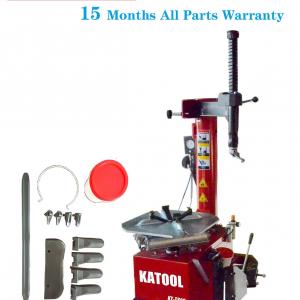
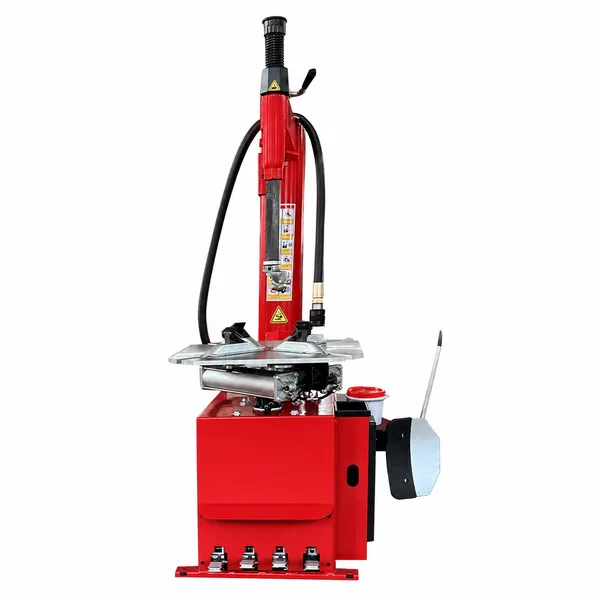
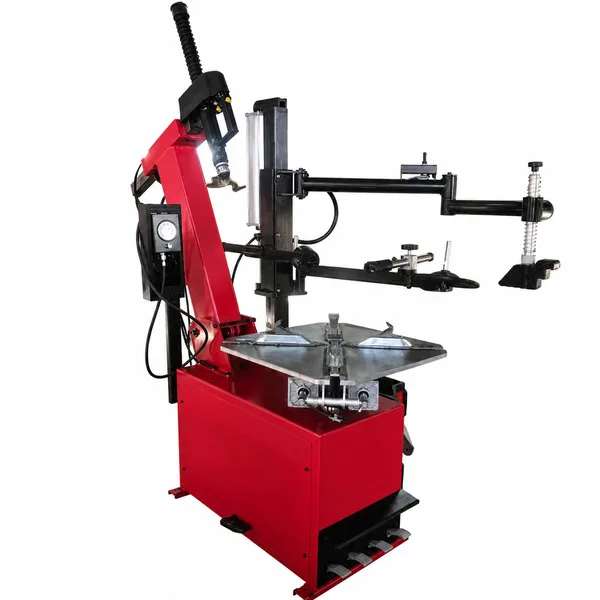
The blade position also matters. It should approach the tire sidewall at the intended angle and work close to the rim without contacting it. Incorrect wheel placement can make a functioning machine look weak, especially with low-profile tires or wheels that need a different support position. For wheel-clamp service, review the operating arrangement of an Autokato KT-T810 wheel-clamp tire changer or comparable machine before changing adjustments. The goal is controlled force at the sidewall, not contact with the wheel.
Use Proper Lubrication and Clean Working Surfaces
Friction at pivots, sliders and joints can make a pneumatic system feel underpowered. Clean visible debris from the working area and apply only the lubricant and intervals recommended for the equipment. Excess lubricant can attract dust, while the wrong product can affect seals or painted surfaces. The tire bead and rim should also be prepared with an appropriate mounting lubricant; dry or damaged bead areas create unnecessary resistance and increase the chance of tire or wheel damage.
Regular cleaning is particularly important in busy tire shops because rubber dust, wheel-weight fragments and dirt collect around moving equipment. A short inspection at the start of a shift is usually easier than diagnosing a complete loss of movement during a customer job.
Match the Machine to the Wheel and Tire
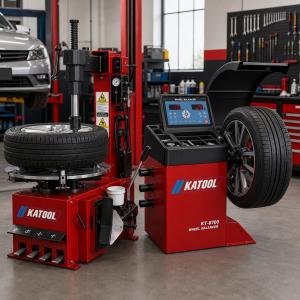
Not every tire requires the same procedure. Stiff sidewalls, run-flat constructions, large wheels and specialty applications may need specific tools, adapters or an assist arm. A shop handling a broad mix of passenger and light-truck work should compare machine capability, rim range and support tools before treating every difficult bead as a bead-breaker failure. The Autokato KT-T850 tire changer is one example to review when planning day-to-day wheel service capacity and operating workflow.
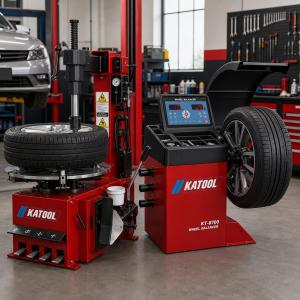
After mounting, balancing is the next part of a complete wheel-service process. Pairing tire service with suitable wheel balancing equipment helps workshops move each wheel from removal to final inspection without creating unnecessary handling steps.
Know When to Escalate the Repair
Stop using the affected function and arrange qualified service if there is a damaged cylinder, a persistent valve fault, uncontrolled movement, air loss that cannot be safely isolated, or uncertainty about the machine setup. Replacing parts without identifying the source of the issue can extend downtime and introduce new risks. For equipment selection, technical questions or a model-specific service discussion, the Autokato project inquiry page can be used to share the machine type, application and symptoms.
Conclusion
Effective tire changer bead breaker troubleshooting starts with air supply and safe operating checks, then moves through pedal response, valves, lines, cylinder travel, linkage condition and wheel positioning. A disciplined process helps technicians restore consistent tire service while protecting wheels, tires and the people working around the machine.