Tire Changer and Wheel Balancer Workstation Layout Guide
Tire Changer and Wheel Balancer Workstation Layout Guide
A practical tire service bay needs more than two machines placed wherever space is available. A well-planned tire changer and wheel balancer workstation should support a clear flow from wheel removal to tire changing, inflation, balancing and final inspection. For tire shops, auto repair centers and garage equipment distributors, a good layout can reduce unnecessary movement and help technicians complete each job more consistently.
Start with the real service workflow
The best workstation layout follows the order of daily work. Technicians normally bring the removed wheel into the tire service area, release the bead, remove the old tire, mount the replacement tire, inflate it and then move the wheel to the balancer. The tire changer should therefore be positioned before the wheel balancer in the natural direction of travel. This simple sequence prevents technicians from carrying wheels back and forth across the bay.
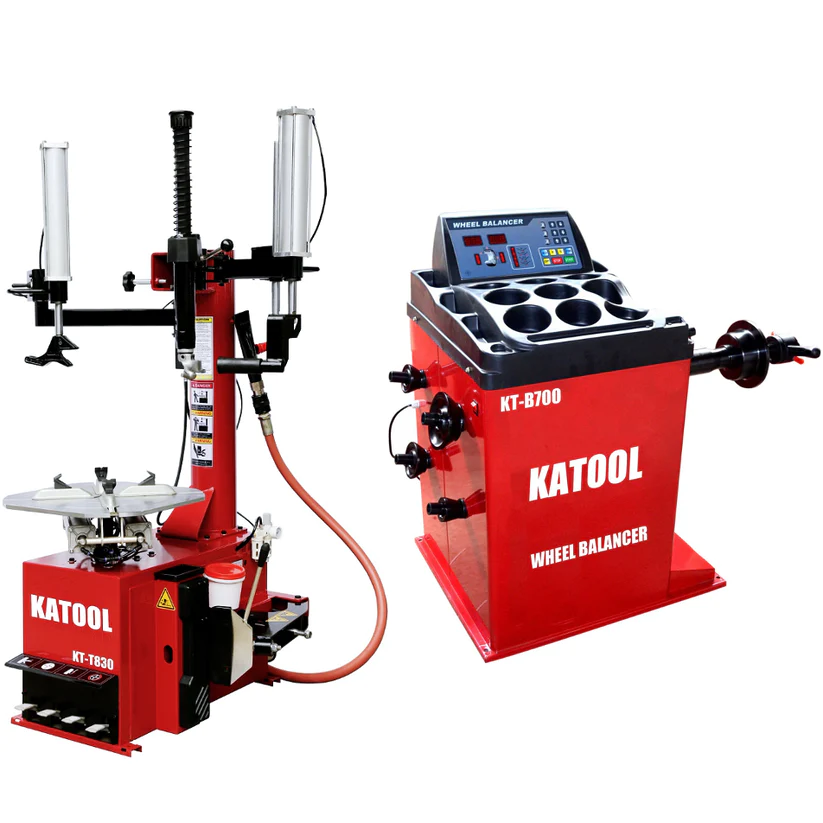
Buyers comparing a complete setup can review the KATOOL KT-T830 tire changer and KT-B700 wheel balancer combo. Matching the two machines as one tire service workstation makes it easier to plan power, compressed air and operating space together.
Leave enough operating clearance
A tire changer needs clearance around the turntable, bead breaker and assist arms. The operator must be able to load wheels without hitting a wall, tool cabinet or nearby vehicle. A wheel balancer also needs room for the shaft, wheel guard and the operator standing in front of the control panel. When planning a tire changer and wheel balancer shop layout, measure the machines in their working positions rather than only using cabinet dimensions.
Shops handling larger SUV or light-truck wheels should allow more space for wheel movement. A narrow aisle may look efficient on paper but can slow the technician when a heavy wheel must be turned, lifted or moved between machines.
Plan electricity and compressed air before installation
The tire changer usually needs a stable compressed-air supply as well as the correct electrical connection. The wheel balancer requires clean electrical power and should be placed on a firm, level floor. Air lines and power cables should not cross the technician's walking path. Wall-mounted or overhead routing can help keep the workstation clear and reduce trip hazards.
Before selecting equipment, shops can compare available KATOOL tire changer machines and KATOOL wheel balancer machines based on wheel range, assist-arm needs and daily workload.
Keep tools close without blocking the machines
Valve tools, wheel weights, lubricant, tire levers and cleaning materials should be within easy reach. A small tool cart or wall organizer can serve both machines, but it should not block the bead breaker or wheel balancer shaft. Frequently used supplies should be placed between the machines or slightly forward of the workstation, where the technician can reach them without walking behind equipment.
Use a level and stable floor
Both machines work best on a solid, level surface. An unstable wheel balancer can affect measurement consistency, while an uneven tire changer can make wheel handling less comfortable. Before installation, inspect the floor, confirm the service bay is dry and verify that machine feet can sit securely.
Choose the workstation around daily volume
A small repair shop may need a compact layout with straightforward controls. A high-volume tire shop may need more space between machines, additional wheel carts and separate storage for weights and consumables. Shops still comparing equipment can use the tire changer machine buying guide to review wheel range, assist functions and service capacity before finalizing the workstation.
A good tire changer and wheel balancer workstation layout keeps the service sequence short, the operating area clear and the utility connections organized. Autokato Engineering supplies KATOOL tire service equipment for repair shops, dealers and garage equipment distributors planning complete service bays.